Types of Nebulae
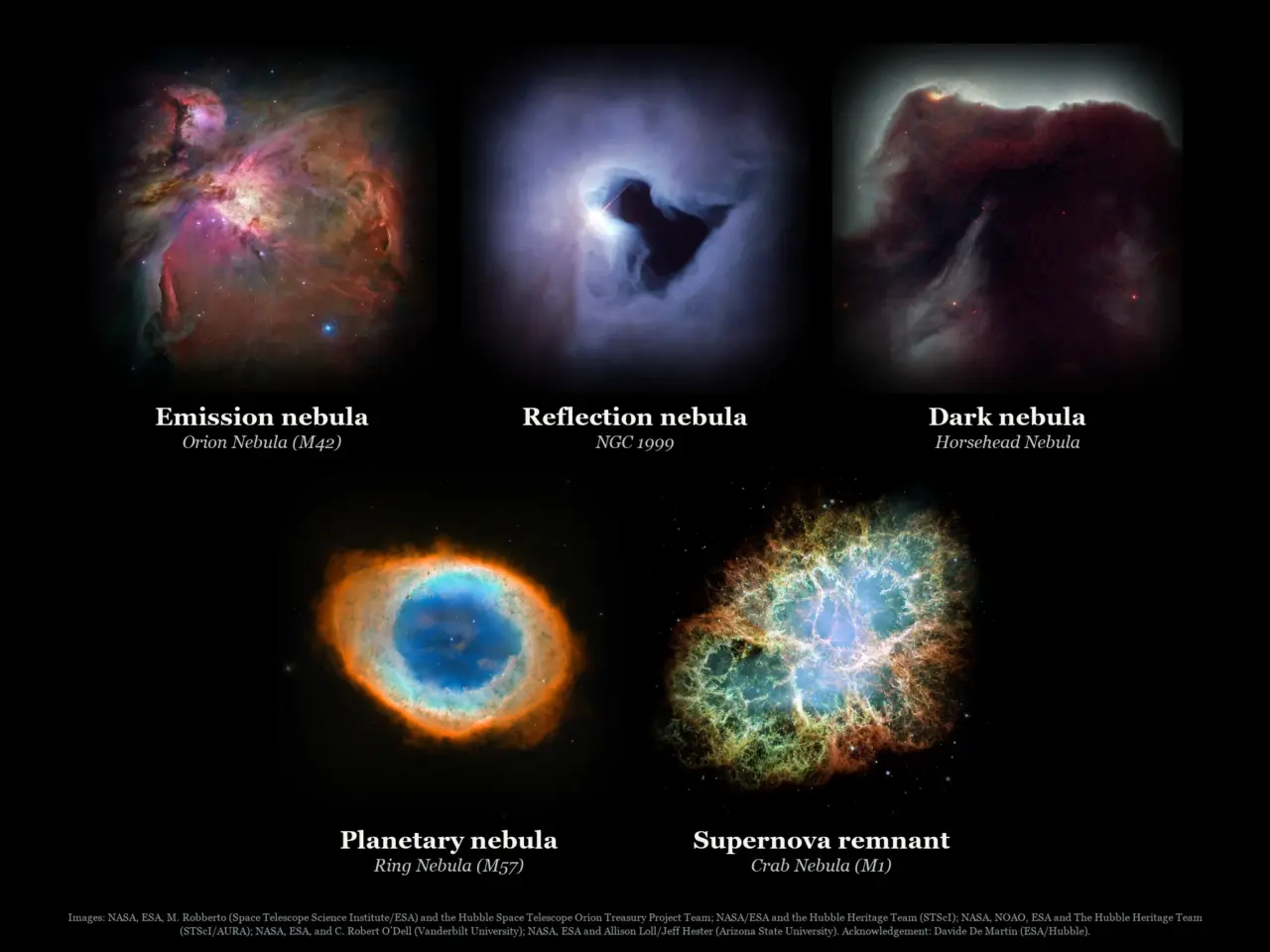
Explore the main types of nebula, the clouds of gas and dust where stars are born and where they end their lives, in real Hubble images.
In this collection
Each type up close
About this topic
A nebula is a giant cloud of gas and dust in space. Some are nurseries where new stars are forming; others are made from material thrown off by dying stars. Astronomers group nebulae by how they shine, or whether they shine at all, and by how they formed.
The nebulae in our collection
| Type | Example shown | Distance from Earth | How it shines |
|---|---|---|---|
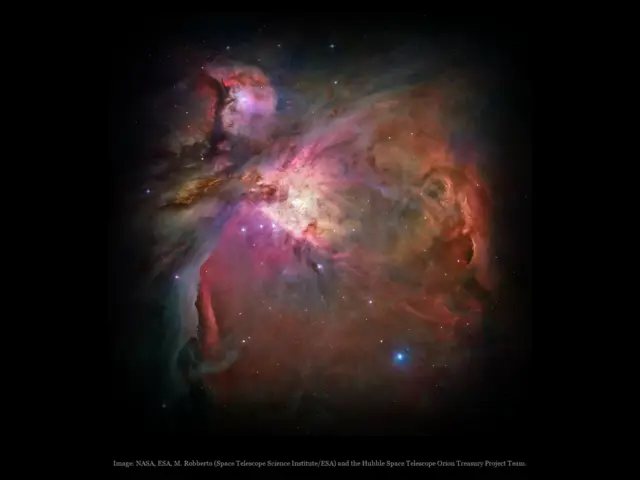
| Emission nebula | Orion Nebula (M42) | About 1,500 light-years | Its own gas glows, energised by hot young stars |
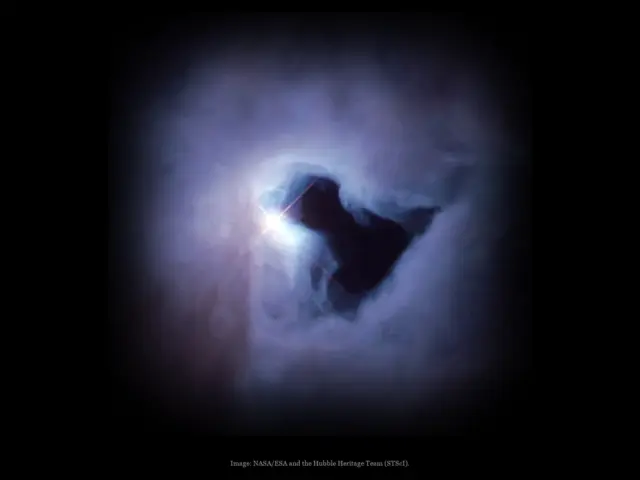
| Reflection nebula | NGC 1999 | About 1,500 light-years | Dust reflects light from a nearby star |
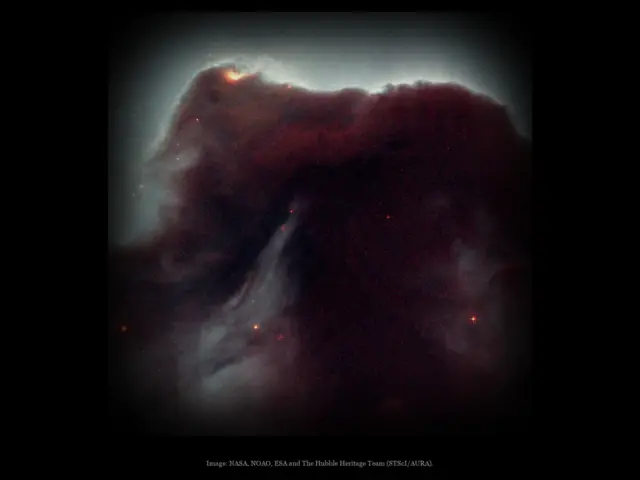
| Dark nebula | Horsehead Nebula | About 1,400 light-years | It doesn’t; it blocks light from behind |
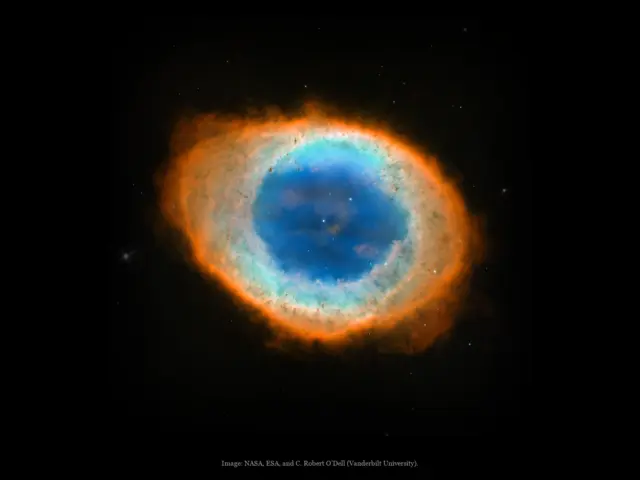
| Planetary nebula | Ring Nebula (M57) | About 2,000 to 2,500 light-years | Gas shed by a dying Sun-like star |
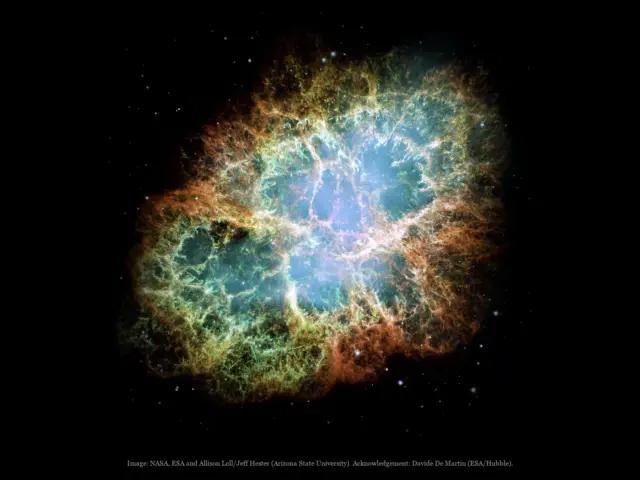
| Supernova remnant | Crab Nebula (M1) | About 6,500 light-years | Debris from an exploded star |
Distances are approximate; sources give slightly different values.