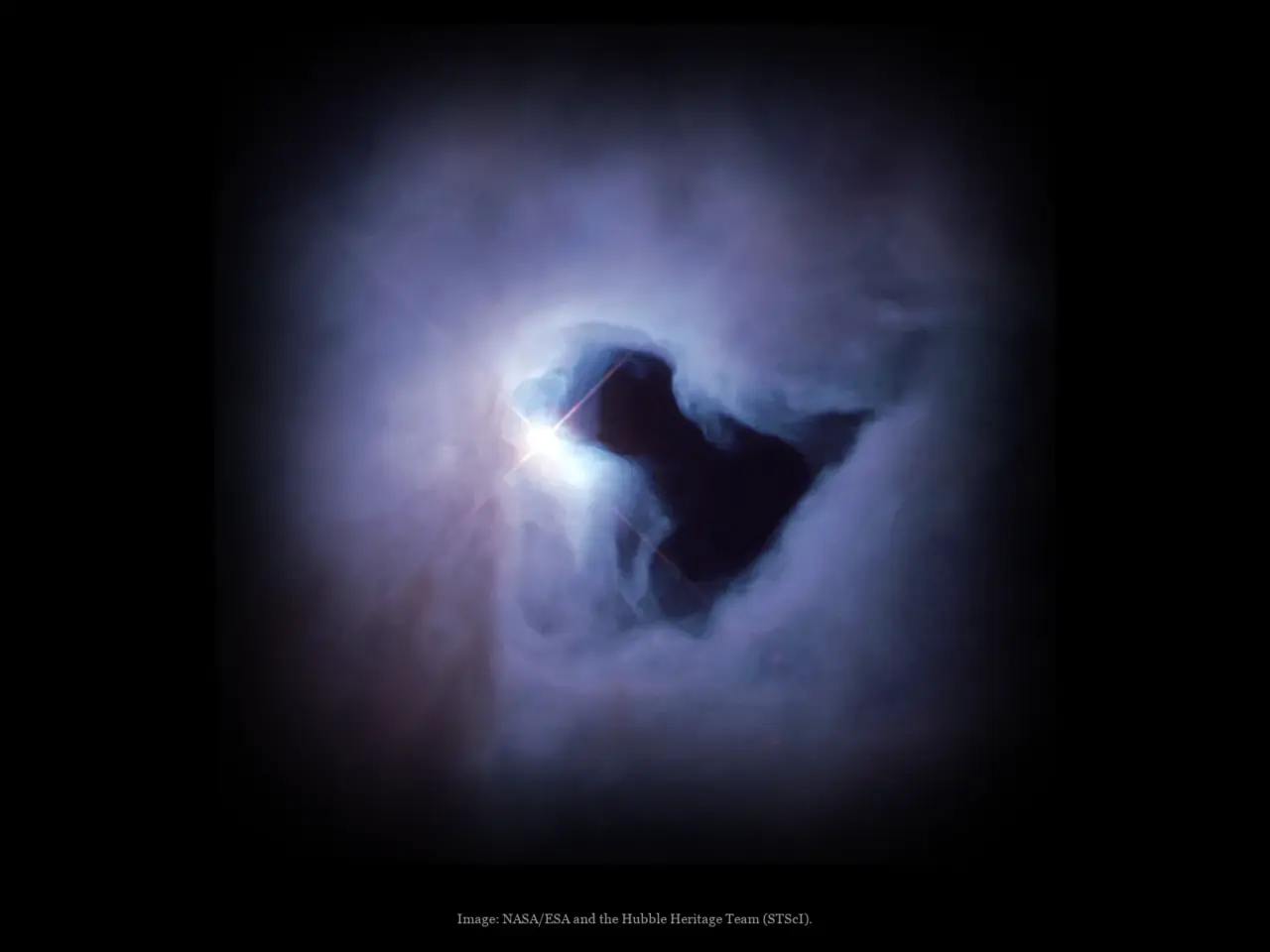
Reflection Nebula
Example: NGC 1999
A cloud of dust that does not glow by itself but reflects the light of a nearby star, often looking blue.
Key facts
- How it shines
- Dust reflects light from a nearby star
- Typical colour
- Blue
- Example shown
- NGC 1999
- Lit by
- The young star V380 Orionis
- Example’s distance
- About 1,500 light-years
About the Reflection Nebula
How to recognise it
Reflection nebulae shine only because their dust reflects light from nearby stars. They often look blue, for a similar reason to the blue sky: blue light is scattered more easily.
The example: NGC 1999
NGC 1999, in the constellation Orion, is lit by a newborn star, V380 Orionis, near its centre. The dark keyhole shape was once thought to be a dense cloud blocking light, but observations by ESA’s Herschel space observatory showed it is an empty region of space. What made it is still unknown.
Sources
Facts checked: 29 October 2026