Planetary Nebula
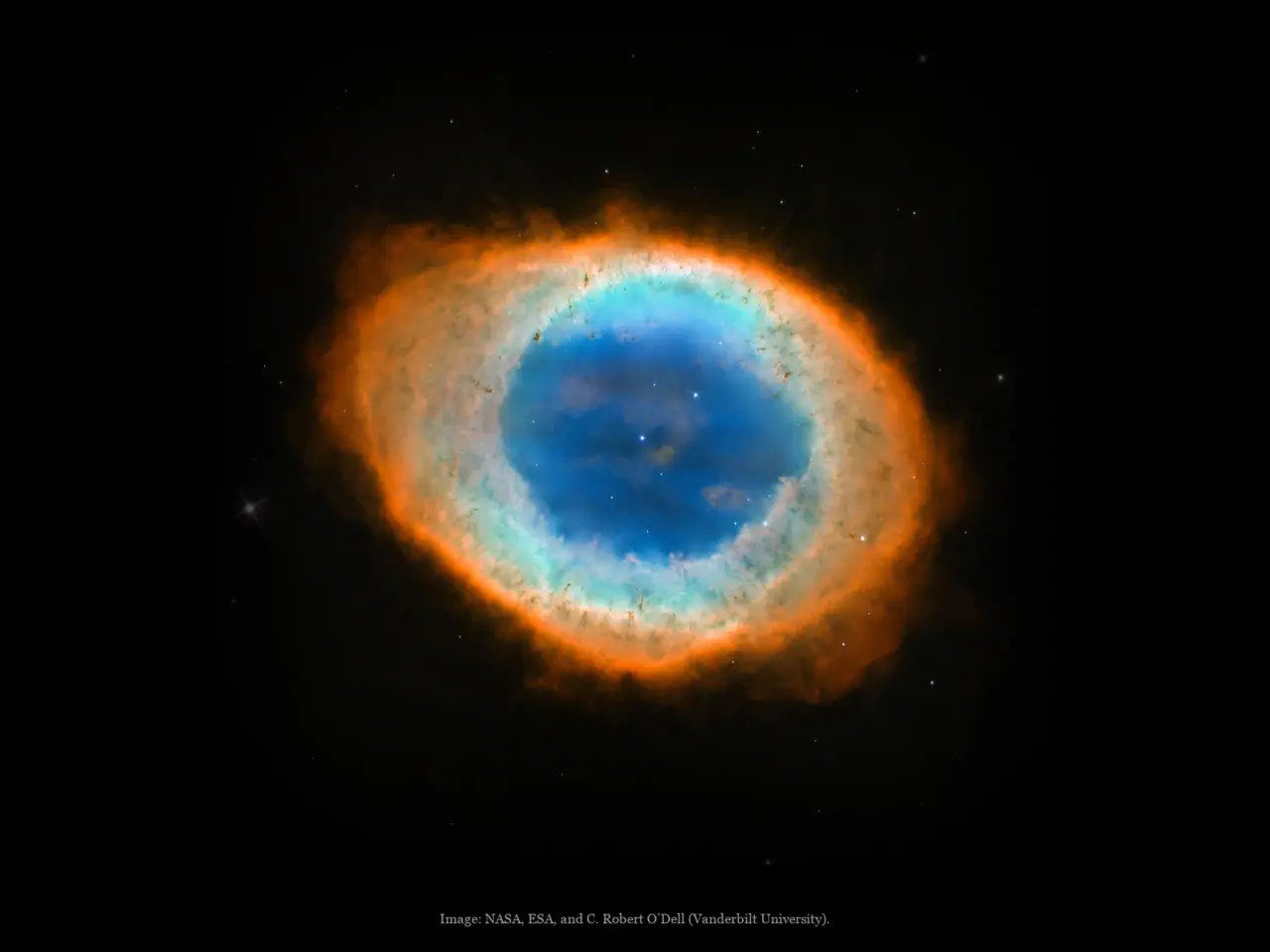
Example: Ring Nebula (M57)
The glowing shell of gas thrown off by a dying Sun-like star. Despite the name, it has nothing to do with planets.
Key facts
- How it forms
- A dying Sun-like star sheds its outer layers
- Name
- Historical; not related to planets
- Example shown
- Ring Nebula (M57)
- Example’s distance
- About 2,000 to 2,500 light-years
About the Planetary Nebula
How to recognise it
Planetary nebulae are glowing shells, rings or bubbles of gas, often with a tiny star at the centre. They form when a Sun-like star reaches the end of its life and puffs off its outer layers. The name is historical: through early telescopes some looked like the round discs of planets.
The example: the Ring Nebula
The Ring Nebula, M57, is the glowing remains of a Sun-like star in the constellation Lyra, about 2,000 to 2,500 light-years away. From Earth it looks like a simple ring, but Hubble observations show it is shaped more like a distorted doughnut.
Sources
- NASA Hubble Messier Catalog: Messier 57
- ESA/Hubble: The Ring Nebula
- NASA Space Place: What is a nebula?
Facts checked: 29 October 2026