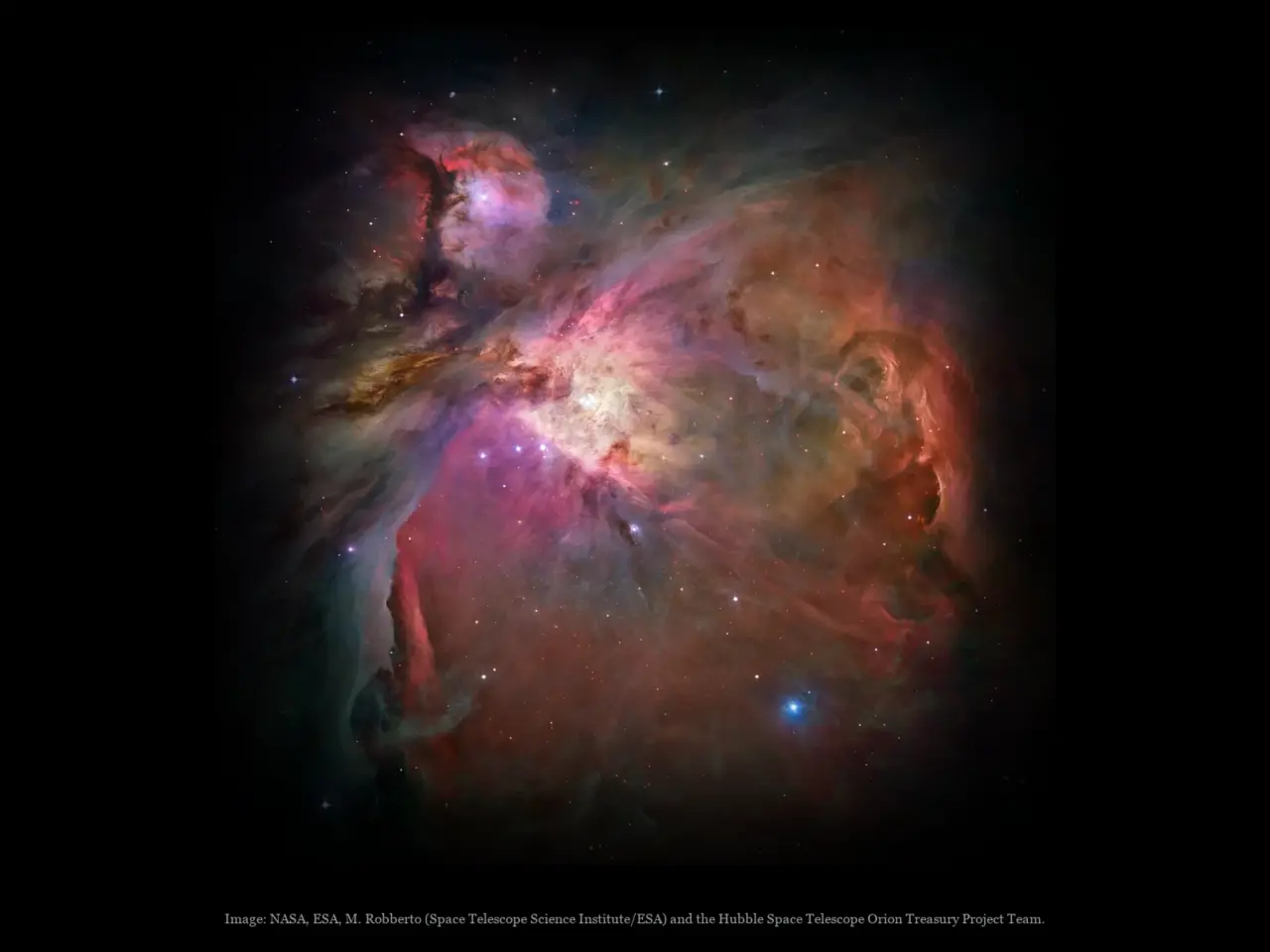
Emission Nebula
Example: Orion Nebula (M42)
A glowing cloud of gas lit up by hot young stars inside it, often a nursery where new stars are forming.
Key facts
- How it shines
- Its gas glows, energised by hot young stars
- Typical colours
- Pink and red
- Example shown
- Orion Nebula (M42)
- Example’s distance
- About 1,500 light-years
- Can you see it?
- Yes, with the unaided eye from a dark site
About the Emission Nebula
How to recognise it
Emission nebulae glow with their own light, often in pinks and reds, because intense light from hot young stars energises the gas. Many are star-forming regions.
The example: the Orion Nebula
The Orion Nebula, M42, is the closest large star-forming region to Earth, about 1,500 light-years away. You can see it with the unaided eye from a dark site, as a fuzzy patch just below Orion’s belt. Hubble’s image of it shows more than 3,000 stars.
Sources
- NASA Space Place: What is a nebula?
- NASA Hubble Messier Catalog: Messier 42
- ESA/Hubble: The Orion Nebula
Facts checked: 29 October 2026